
Commercial Real Estate Spotlight: Kansas City, America’s Heartland
While national headlines may be dominated by Taylor Swift and Travis Kelce, Kansas City, Missouri, is quietly earning attention for reasons far more significant than celebrity buzz. In 2025, the Heart of America is emerging as one of the most compelling commercial real estate markets in the country—anchored by measurable performance, durable fundamentals, and meaningful long-term growth potential.
Market Momentum Backed by Performance
Unlike many coastal markets facing oversupply, softening rents, and pricing resets, Kansas City is reporting standout metrics across all major CRE sectors:
Industrial: 7.5 million SF of positive net absorption in Q1 2025 — the second-highest quarterly total in market history.
Office: 432,000 SF of positive absorption in the first half of 2025 — countering national office headwinds.
Multifamily: 96.4% occupancy with 4% year-over-year rent growth, marking the second-highest increase nationally.
Retail: 95.9% occupancy with 2.3% rent growth — outperforming regional and national averages.
With a trailing 12-month transaction volume of $2.7 billion and a surge in corporate relocations, Kansas City is proving it is far more than a slogan — it is a viable, data-backed investment thesis.
Corporate Migration: Major Players Are Betting on KC
Kansas City’s momentum is reflected not only in absorption numbers, but in major corporate commitments:
-
Pfizer: $175M investment for a 425,000 SF facility, creating 2,000 jobs
-
Panasonic: $4B EV battery plant, generating 8,000 jobs
-
Google & Meta: $1.8B in new data centers
-
Fiserv: 427,000 SF regional HQ at Aspiria with 2,000 planned employees by 2030
“These aren’t just local plays,” notes Logan Freeman, a leading Midwest CRE broker. “These are billion-dollar global bets on Kansas City’s future.”
Sector Performance Highlights
Industrial: Kansas City’s Demand Engine
Industrial remains the region’s strongest performer, driven by true user demand rather than speculative development.
-
Vacancy: 6.1%
-
Asking rents: $5.72 PSF
-
YTD absorption: 7.7M SF
-
Under construction: 7.4M SF
-
Johnson County leads with 4M SF of absorption; 85.8% of 2025 deliveries are built-to-suit.
Office: Defying National Trends
While office markets nationwide continue to face headwinds, Kansas City has posted three consecutive quarters of positive absorption.
-
Vacancy: 18.3%, down from 19% YOY
-
Asking lease rate: $23.25 PSF
-
Class A: $25.89 PSF
-
Q2 absorption: 117,375 SF
As Freeman notes: “In KC, investors can acquire assets at $60–$80 PSF and reposition them strategically over the next decade.”
Multifamily: Stable and Sustainable Growth
Kansas City’s multifamily sector continues to deliver strong fundamentals:
-
Vacancy: 3.6%
-
Effective rents: $1.50 PSF
-
YOY rent growth: 5.0%
-
YTD net absorption: 3,656 units vs. 2,200 delivered
Central Kansas City leads the region with 938 units absorbed.
Retail: Resilient and Outperforming
Retail remains one of the metro’s most stable sectors, buoyed by high occupancy and new development activity.
Notable projects include:
-
Olathe Gateway: $338M mixed-use project with 67,000 SF of retail and a Michael’s Wonder World theme park
-
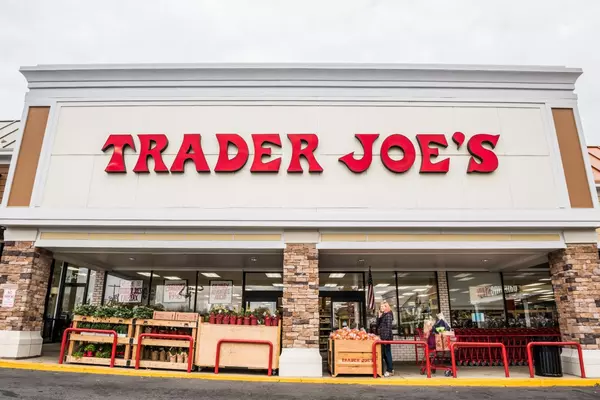
Merriam Grand Station Marketplace: $102M development anchored by Trader Joe’s — the city’s first grocery store since 2018
Key metrics:
-
Occupancy: 95.9%
-
Asking rent: $14.91 PSF (+2.3% YOY)
-
Investment volume: $520M (past 12 months)
-
Leasing outpaced deliveries 6:1
Infrastructure & Downtown Expansion
Kansas City is actively investing in transformative infrastructure projects that support long-term value creation:
-
$6.3B across eight major developments underway
-
$351M streetcar extension (delivering 2025)
-
$334M in downtown public space upgrades
-
$527M Samara Road improvements in the West Bottoms
Downtown’s population has grown 88% since 2010, supported by $3B in recent development.
Cap Rate Landscape
Kansas City offers realistic, yield-driven cap rates with potential for future compression:
-
Multifamily: 6.0%
-
Retail: 7.1%
-
Industrial: 7.6%
-
Office: 8.4%
Compared with coastal markets with compressed yields, Kansas City provides compelling value and upside.
Economic Fundamentals
Kansas City’s economic stability is reinforced by:
-
Population growth: 25,000 new residents per year
-
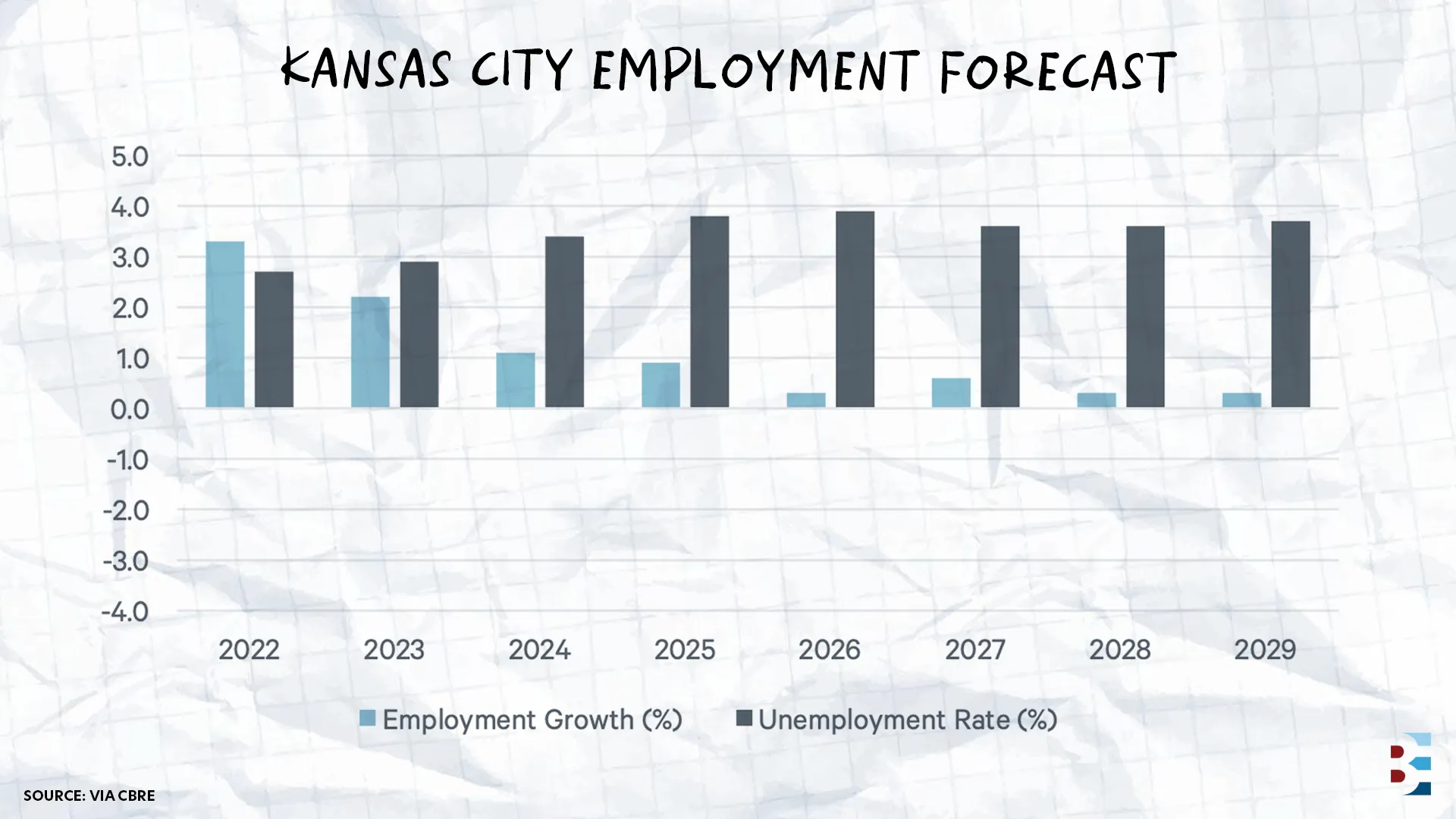
Unemployment: 5.3% (vs. 6% nationally)
-
Historic stability: 3.8% average unemployment (2016–2024)
-
Higher education: 87,000+ students enrolled in four-year institutions
-
Logistics advantage: 80% of the U.S. reachable within two-day trucking
Development Pipeline
Kansas City’s development pipeline reflects measured, sustainable expansion across asset classes.
Multifamily Deliveries
-
Arrive KC: 360 units (2026)
-
Oberon: 281 units (2026)
-
Alto Apartments: 280 units (2025)
Downtown Mixed-Use
-
The Helm: 232 units (2025)
-
Wonderland Apartments: 215 units (2025)
-
Grand Place: 250,000+ SF (2026)
Retail Transactions
-
Sprouts Farmers Market (Lenexa): 86,280 SF for $11.5M
-
Liberty Commons: $232–$411/SF
-
Chipotle (Independence): 2,330 SF for $3.125M
Investor Takeaways
Strengths:
-
Diverse and resilient economic base
-
Significant infrastructure investments nearing completion
-
Major corporate commitments signaling long-term confidence
-
Attractive cap rates with appreciation potential
-
Strategic geographic logistics advantage
Watch Points:
-
Continued stabilization of the office market
-
Elevated but normalizing construction costs
-
Occasional development delays
-
Retail construction costs influenced by tariffs
Freeman summarizes it well:
“Kansas City isn’t the next big thing — it’s the right thing happening right now. While other markets wait for a rebound, Kansas City is delivering today what others are promising tomorrow.”
All rights to the original material belong to The Best Ever CRE Post
Categories
Recent Posts



GET MORE INFORMATION

Dharam Chaudhari
FOUNDER | CEO License ID: Licensed in KS,MO,IA,NE
FOUNDER | CEO License ID: Licensed in KS,MO,IA,NE